
Blog
GPS Trackers for Classic Cars UK: Protecting Valuable Vehicles

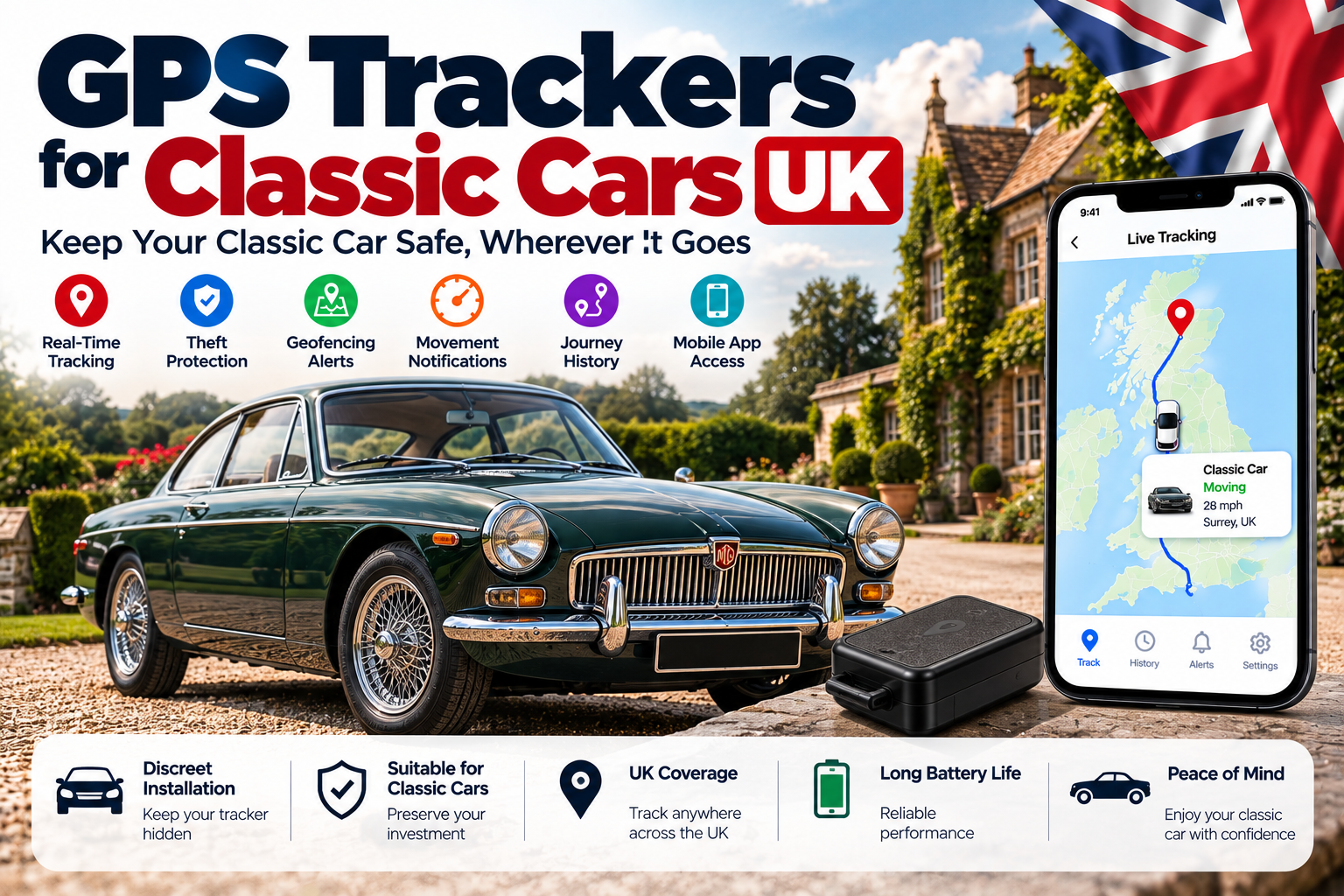
GPS Trackers for Classic Cars UK: Protecting Valuable Vehicles
Classic cars are more than just a way to travel. For many owners, they represent years of passion, restoration work and significant financial investment. Whether you own a vintage sports car, a restored British classic or a rare collector’s vehicle, protecting it against theft is an important responsibility.
Unlike everyday vehicles, classic cars can be difficult or expensive to replace. Some have unique components, original interiors and historical features that cannot easily be reproduced.
This is why GPS Trackers for Classic Cars are becoming an important consideration for owners who want additional vehicle security.
A suitable tracking system can provide location information, monitor vehicle movements and support the recovery process if a classic car is stolen. In this guide, we explain how trackers work, which features matter, how discreet installation can protect originality and what UK owners should consider before choosing a system.
Why Do Classic Cars Need Additional Security?
Classic vehicles can attract attention because of their rarity, value and collectability. Some are also stored for long periods, transported to events or parked away from their owner’s home.
Factory security on older vehicles may be more limited than the electronic security available in modern cars.
Common security concerns include:
- Theft from residential driveways or garages.
- Unauthorised movement during storage.
- Theft while attending classic-car events.
- Limited original immobilisation technology.
- Difficulty locating a vehicle after it has been stolen.
- The financial and sentimental impact of losing a rare vehicle.
A tracker can provide an additional layer of protection by helping owners establish where their vehicle is located.
What Are GPS Trackers for Classic Cars?
GPS Trackers for Classic Cars are devices designed to provide location information about a vehicle using satellite positioning and communication technology.
The tracker is installed in the car and communicates location data through a supported network. Depending on the product and subscription, owners may be able to access tracking information through a mobile application, online platform or monitoring service.
Typical features can include:
- Vehicle location information.
- Movement notifications.
- Journey history.
- Theft-related alerts.
- Remote tracking access.
- Professional monitoring on selected systems.
- Recovery support through an associated service.
Not every tracker offers all these features. Before buying, check the specification of the exact product and understand what its subscription includes.
10 Reasons to Consider GPS Trackers for Classic Cars
1. Additional Protection for Valuable Vehicles
Classic cars can represent substantial financial investments. Rare models, restored vehicles and limited-production editions may be particularly valuable.
A GPS tracker provides an additional security measure by helping establish the vehicle’s location if it is moved or stolen.
For owners who have invested considerable time and money in restoration, this added tracking capability can be especially valuable.
2. Vehicle Location Information
The main purpose of a GPS tracker is to provide information about where a vehicle is located.
If your classic car is stolen, available tracking information may help establish its position and movements.
This can support the reporting and recovery process, although no tracker can guarantee that a stolen vehicle will be recovered.
3. Movement Alerts
Some tracking systems can notify owners or monitoring services when unexpected vehicle movement is detected.
This can be useful for classic cars that are usually kept in a garage or only driven occasionally.
Depending on the tracker, alerts may help owners identify activity that needs further attention.
Check which movement alerts are supported before choosing a product.
4. Discreet Installation
Many classic-car owners want to preserve the vehicle’s original appearance.
A discreetly installed tracker can add modern tracking technology without requiring a prominent dashboard display or visible aftermarket control.
Professional installation should take account of the vehicle’s age, wiring, electrical system and originality.
5. Support for Theft Recovery
If a classic car is stolen, location information can be useful during the recovery process.
Depending on the tracking service, monitoring staff may assist with handling theft-related alerts and providing relevant information.
Owners should understand the provider’s theft-reporting procedure before an emergency occurs.
6. Monitoring During Long-Term Storage
Some classic vehicles spend extended periods in garages, storage facilities or private collections.
A tracking system with suitable movement alerts can provide additional awareness if the vehicle is moved unexpectedly.
This may be particularly useful for owners who do not visit their stored vehicles every day.
7. Useful for Classic-Car Events and Transport
Classic cars are often driven to exhibitions, shows, auctions and specialist events.
Some owners also transport their vehicles using trailers or professional vehicle transport services.
A suitable tracker may provide additional location information during vehicle use or certain transport situations. However, tracking performance depends on the device, installation, communication coverage and operating conditions.
8. Potential Insurance Relevance
Some insurers may specify particular tracking requirements for valuable or high-risk vehicles.
A tracker may therefore be relevant when arranging classic-car insurance.
However, installing a GPS tracker does not automatically guarantee an insurance discount or satisfy every policy requirement.
Always confirm the exact product and security category accepted by your insurer.
9. Remote Access to Tracking Information
Many modern tracking systems offer mobile or online access.
Depending on the package, owners may be able to view location information, review journeys and receive notifications remotely.
This can make vehicle monitoring more convenient, especially when a classic car is stored away from home.
10. Complementary Protection Alongside Other Security Measures
A tracker is only one part of vehicle security.
Classic-car owners may also consider:
- A suitable electronic immobiliser.
- A mechanical steering or wheel lock.
- Secure garage storage.
- Additional door and garage security.
- Sensible key management.
- Appropriate insurance cover.
Combining different measures can provide broader protection because each addresses a different aspect of vehicle security.
Which GPS Tracker Is Best for a Classic Car?
The best tracker depends on the vehicle’s value, age, electrical system, storage arrangements and the level of monitoring required.
There are several options worth understanding.
Standard GPS Trackers
A standard GPS tracker can provide location information through an associated app or platform.
It may be suitable for owners who mainly want basic tracking and movement information.
Check its power requirements, communication coverage and subscription arrangements before installation.
Monitored Vehicle Trackers
Monitored systems can provide additional theft-related services.
Depending on the product, this may include professional monitoring and a defined response process when suspicious activity is detected.
These systems may be worth considering for high-value classic cars where recovery support is a priority.
Thatcham Category S7 Asset Location Systems
Some classic-car owners may encounter Thatcham Category S7 when researching vehicle tracking.
S7 is associated with Asset Location Systems. It is a specific security category, not a generic label for every GPS tracker.
If your insurer requests an S7 system, confirm that the exact product holds the required current certification and meets the policy conditions.
Thatcham Category S5 Vehicle Tracking Systems
S5 is associated with Vehicle Tracking Systems.
It is a different category from S7, and the two should not be treated as interchangeable.
If your insurer specifies S5, ask which products it recognises before arranging installation.
S5 vs S7 Trackers for Classic Cars
Understanding the difference between S5 and S7 can help you choose an appropriate system.
| Feature | S5 Tracker | S7 Tracker |
|---|---|---|
| Thatcham category | Vehicle Tracking System | Asset Location System |
| Main classification | Vehicle tracking | Asset location |
| Location functionality | According to product specification | According to product specification |
| Monitoring | Product and service dependent | Product and service dependent |
| Insurance suitability | Depends on policy | Depends on policy |
| Subscription | Service dependent | Service dependent |
The right category depends on the insurer’s requirements and the specific vehicle.
Do not assume that an S7 product will satisfy a policy requiring S5, or vice versa.
What Should You Look for in a Classic-Car GPS Tracker?
Classic cars can have different electrical systems and storage requirements from modern vehicles.
Before buying GPS Trackers for Classic Cars, consider these important features.
Power Consumption
Some classic vehicles are not driven regularly. A tracker should therefore be suitable for the vehicle’s electrical system and storage routine.
Ask about standby power consumption and whether the system has a suitable battery-management arrangement.
Backup Battery
Some trackers include an internal backup battery designed to support operation if the main vehicle power supply is interrupted.
Check whether this feature is included and how long it is designed to operate.
Movement Detection
Movement detection can be useful when a vehicle is normally stored securely.
Find out whether alerts can be configured for unexpected movement and whether the feature is included in the subscription.
Communication Coverage
A GPS tracker also needs a way to transmit location information.
Check which communication networks the product uses and whether coverage is suitable for the areas where the vehicle is stored and driven.
App and Monitoring Access
Decide whether you want basic app access, professional monitoring or both.
Compare the features carefully because different products can offer very different services.
Subscription Costs
Some trackers require an ongoing subscription for communication, monitoring or app services.
Check the full cost over several years rather than comparing only the initial hardware and installation prices.
Why Discreet Professional Installation Matters for Classic Cars
Classic vehicles often have original interiors, older wiring and electrical systems that need careful handling.
A professional installer should understand the importance of preserving the vehicle’s condition while fitting the tracking equipment.
Before installation, discuss:
- The vehicle’s make, model and year.
- Its electrical system and battery arrangement.
- Whether the vehicle has been restored or modified.
- The preferred installation approach.
- Power consumption during storage.
- Any manufacturer or insurer requirements.
The installer should explain where the equipment will be fitted, how it will be powered and how the system will be tested.
Avoid installations that involve unnecessary changes to original trim or wiring.
Does a GPS Tracker Prevent Classic-Car Theft?
A GPS tracker is primarily designed to provide location and monitoring information. It should not be confused with an immobiliser.
An immobiliser is designed to restrict unauthorised vehicle operation.
A tracker can help identify where a vehicle is and may support recovery after theft.
For stronger protection, classic-car owners can consider combining a tracker with a suitable immobiliser and physical security.
This creates a layered approach:
Prevent: Use appropriate immobilisation and physical deterrents.
Detect: Use alarms or tracking alerts where available.
Locate: Use a suitable tracking system.
Recover: Follow the provider’s theft-reporting process and work with the relevant authorities.
How Much Do GPS Trackers for Classic Cars Cost in the UK?
The cost of GPS Trackers for Classic Cars varies according to the device, service package and installation requirements.
The total price may include:
Tracker Hardware
Different products have different specifications and features.
Professional Installation
Installation costs can vary depending on the vehicle’s age, electrical system and fitting requirements.
Subscription Charges
Monitored tracking services and connected features may require an ongoing subscription.
Additional Equipment
Some systems may require additional accessories, backup power arrangements or driver recognition devices.
When requesting a quote, ask for a complete breakdown covering the tracker, installation, VAT, subscription and any additional costs.
Do GPS Trackers Reduce Classic-Car Insurance Costs?
An approved or insurer-recognised tracking system may be relevant to your insurance arrangements, but there is no automatic guarantee of a premium reduction.
Classic-car policies can have specific requirements based on the vehicle’s value, storage arrangements and security risk.
Before buying, ask your insurer:
- Is a tracker required for my vehicle?
- Do you specify S5 or S7?
- Which exact tracker products are accepted?
- Must the system be professionally installed?
- Does the subscription need to remain active?
- Do you require an installation certificate?
- Are there any additional storage or security conditions?
Getting written confirmation can help avoid misunderstandings.
How to Choose the Right Tracker Installer
Choosing an experienced installer is important, particularly when working with a classic vehicle.
Look for a provider who can:
- Explain the available tracker options.
- Confirm compatibility with your vehicle.
- Understand older vehicle electrical systems.
- Discuss power consumption during storage.
- Install the system discreetly.
- Explain subscriptions and monitoring.
- Provide warranty and aftercare information.
- Supply relevant installation documentation.
A good installer should answer your questions clearly rather than recommending a product without considering your vehicle’s needs.
Are GPS Trackers for Classic Cars Worth It?
For many classic-car owners, a tracker can be a worthwhile addition to their security arrangements.
It may be especially useful if you own:
- A rare or collectible vehicle.
- A restored classic car.
- A valuable vintage sports car.
- A vehicle stored away from home.
- A classic car used for events and exhibitions.
- A vehicle for which the insurer requires tracking.
The value depends on the vehicle, the tracking service and the owner’s priorities.
A tracker cannot remove every theft risk, but it can provide location information and potential recovery support that a basic alarm alone may not offer.
Final Thoughts: GPS Trackers for Classic Cars UK
Choosing suitable GPS Trackers for Classic Cars is an important consideration for owners who want to protect valuable vehicles while preserving their original appearance.
The right system can provide location information, movement alerts and, depending on the service, professional monitoring and recovery support.
Before purchasing, check compatibility, power consumption, installation requirements, subscription costs and your insurer’s exact security conditions.
For the best overall approach, combine suitable tracking with an appropriate immobiliser, physical security and secure storage.
Protect Your Classic Car With a Suitable Tracking System
Looking for a tracking solution for your classic vehicle?
Contact a professional vehicle security specialist to discuss your car’s make, model, year and electrical setup. Ask about compatible GPS trackers, discreet installation, power requirements, monitoring services and any insurance documentation you may need.
Choose a system that suits your vehicle and helps protect the time, care and investment you have put into owning a classic car.
FAQs About GPS Trackers for Classic Cars
Are GPS Trackers for Classic Cars worth buying?
They can be worthwhile for owners who want additional location monitoring and potential recovery support, particularly when protecting valuable, rare or collectible vehicles.
Can a GPS tracker be fitted to an old classic car?
In many cases, a suitable tracker can be installed, but compatibility depends on the vehicle’s electrical system, available power and the product’s requirements.
Will a GPS tracker drain my classic car battery?
A tracker uses electrical power, so standby consumption is important for vehicles that remain parked for long periods. Ask the installer about power requirements and suitable battery-management arrangements.
Can I hide a GPS tracker in a classic car?
Many tracking devices are designed for discreet installation. The installer should choose a suitable position while avoiding unnecessary damage to original trim or wiring.
What is the difference between an S5 and S7 tracker?
S5 is the Thatcham category for Vehicle Tracking Systems, while S7 is the category for Asset Location Systems. Check your insurer’s exact requirement before choosing.
Does a GPS tracker prevent classic-car theft?
A tracker primarily provides location information and supports monitoring or recovery. A separate immobiliser is designed to restrict unauthorised vehicle operation.
Do classic-car GPS trackers require subscriptions?
Many connected or monitored tracking systems require subscriptions. The exact arrangement depends on the product and service package.
Can I track my classic car from my phone?
Some systems provide mobile app or online access, allowing authorised users to view available tracking information. Check the features included with your chosen product.
Will a GPS tracker reduce my classic-car insurance premium?
There is no guaranteed reduction. Ask your insurer whether it recognises the exact tracker and whether installation affects your policy or premium.
What should I check before buying a tracker for a classic car?
Check compatibility, power consumption, backup battery arrangements, communication coverage, monitoring features, subscription costs, installation requirements and insurance conditions.